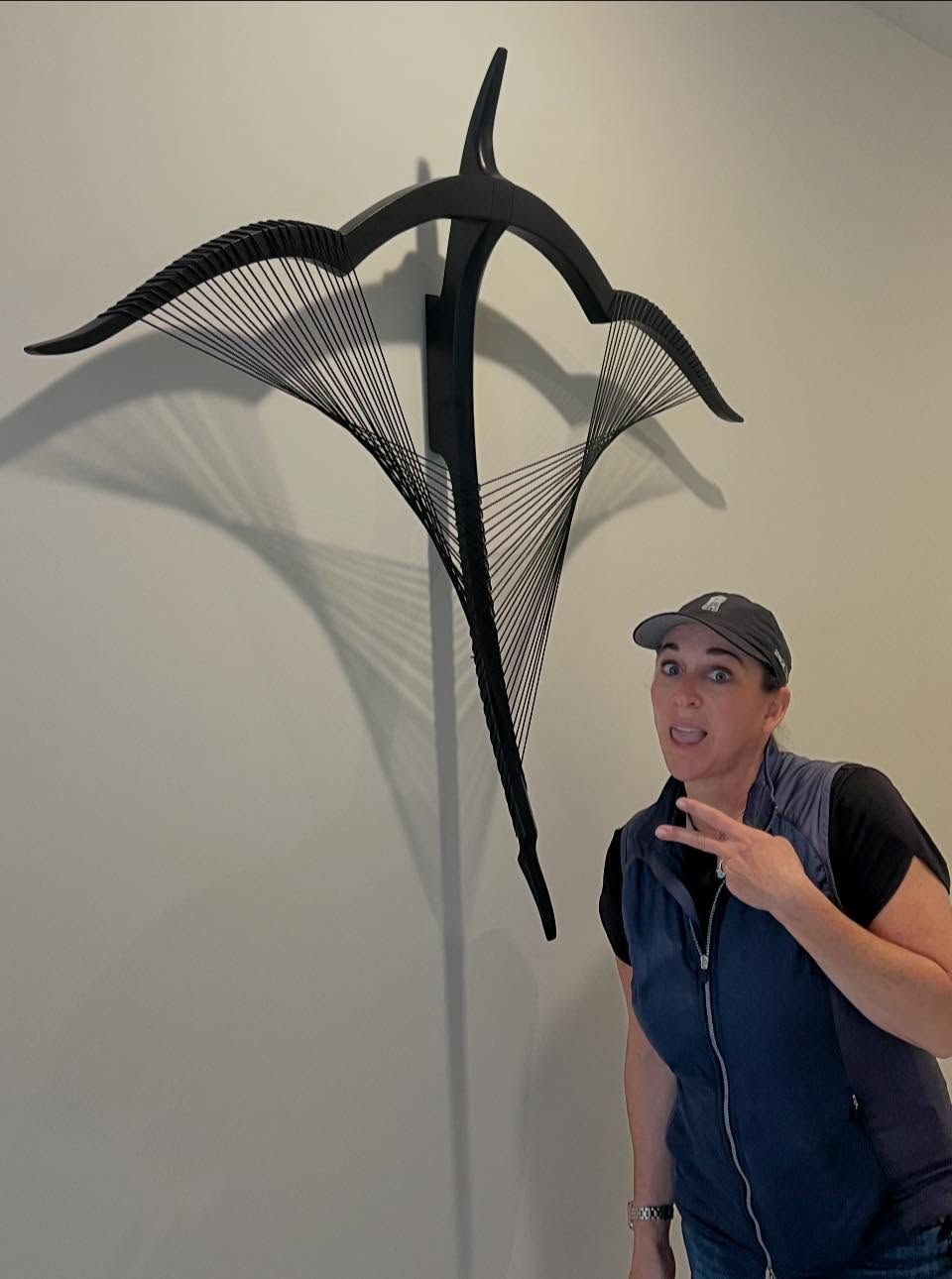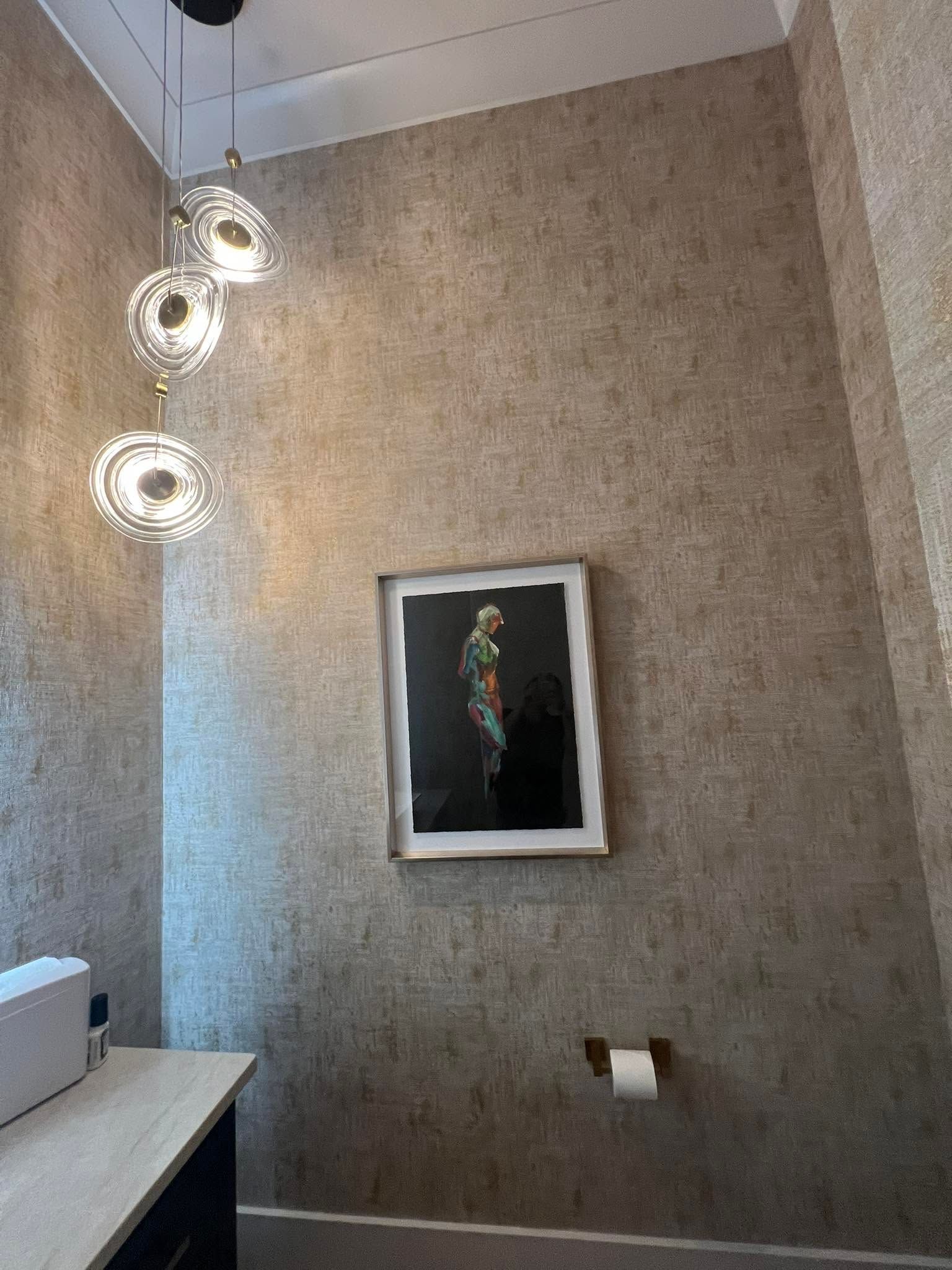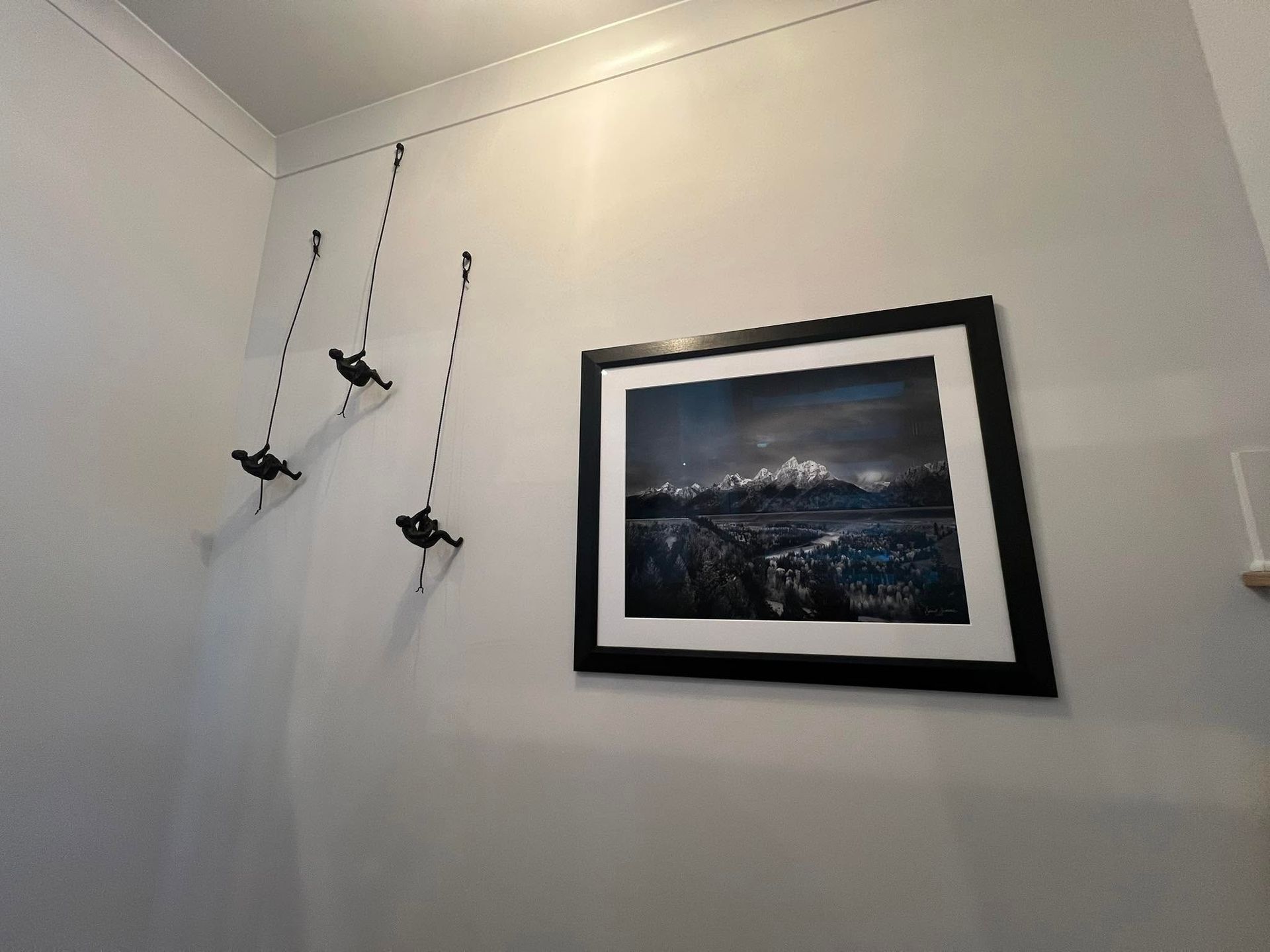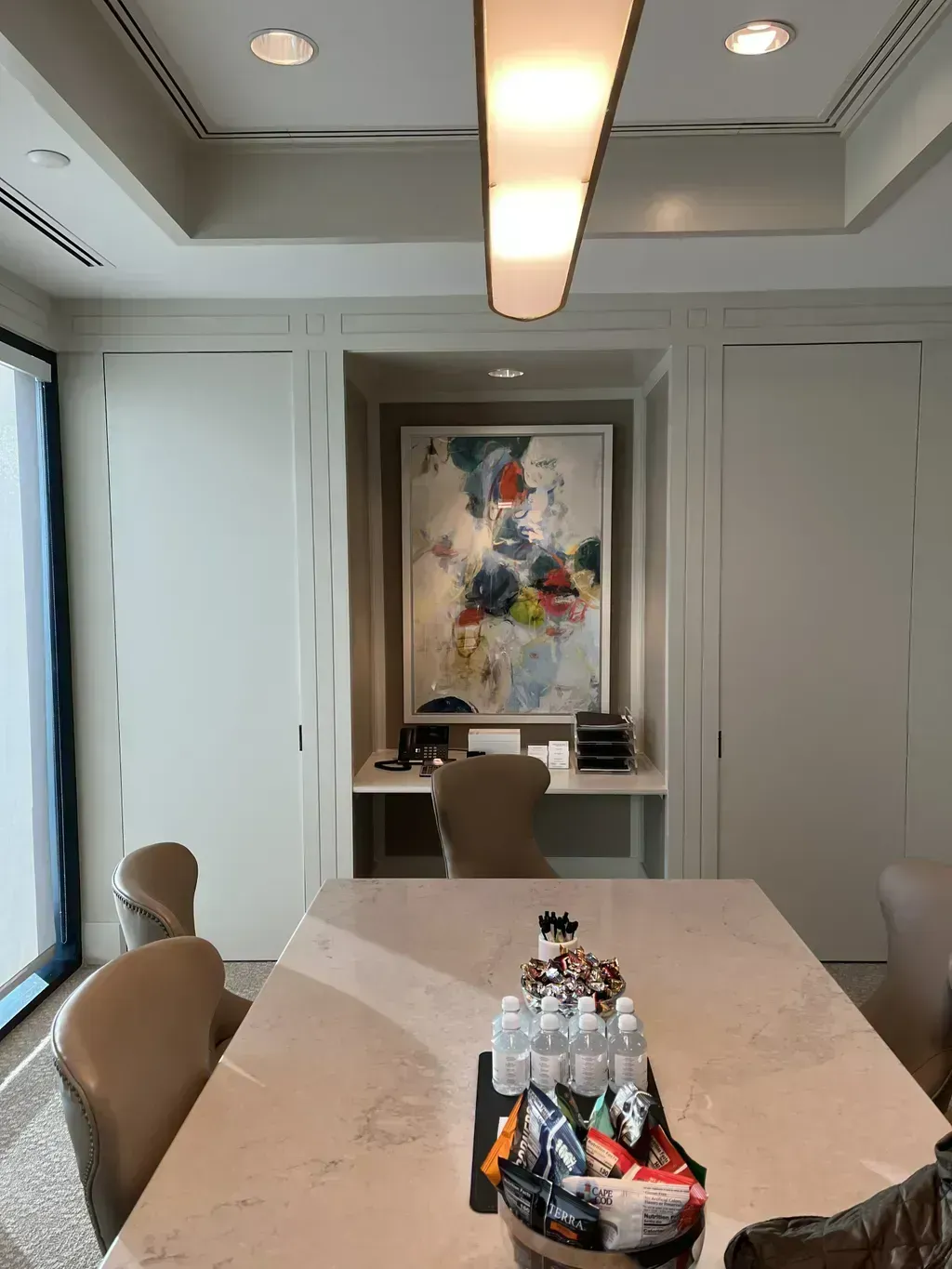
Artwork Mounted to
Corporate Standards
Commercial Art Installation in Milton for offices, hotels, and retail spaces where professional mounting reflects brand standards and building aesthetics
Commercial real estate in North Atlanta requires art installation coordinated with property management, tenant improvement schedules, and often zero-damage mounting on leased walls where permanent alterations violate lease terms. Sedgwick Premium Installation Services installs artwork, signage, and visual displays in commercial facilities throughout Metro Atlanta, providing professional mounting that aligns with architectural finishes and sightlines for maximum visual impact. Properties need this when corporate lobbies require curated installations, when retail spaces use artwork to reinforce brand identity, or when hotel corridors need consistent art placement across multiple floors and wings.
The work conducts load assessment for commercial wall materials including concrete, metal studs, and brick, uses non-penetrating or reversible mounting where required by lease terms, and aligns installations with architectural features and viewing angles. Commercial environments present wall construction that differs significantly from residential—metal studs spaced differently than wood framing, poured concrete that requires masonry anchors, and demising walls between tenant spaces that may not support heavy loads.
Request a site evaluation to review wall construction, artwork specifications, and mounting options that meet both aesthetic and lease requirements.
What Proper Commercial Mounting Accomplishes
Commercial art installation begins with understanding wall structure behind finished surfaces. Metal stud framing requires toggle bolts or specialty anchors, concrete demands drilling and expansion anchors rated for artwork weight, and glass or stone accent walls need non-penetrating systems like adhesive mounts or hanging rails. Lease agreements often prohibit permanent wall penetration, driving the need for mounting solutions that hold securely but remove without trace when tenant terms end.
After installation, you see artwork positioned at consistent heights across hallways and rooms, pieces that align with architectural elements like crown molding or door frames, and mounting hardware that remains invisible from normal viewing distances. The installation withstands the vibration and traffic typical in commercial buildings, and artwork stays level despite HVAC airflow and door movement that can shift improperly mounted pieces over time.
Work accommodates both permanent installations and rotating displays, with mounting systems designed for the intended longevity and changeout frequency. Service extends across the Perimeter area, North Atlanta corridor, Sandy Springs, Cumming, and Forsyth County, with scheduling that respects building access procedures and tenant coordination requirements.
Common Questions About This Service
Facility managers and commercial tenants across Milton and surrounding areas ask about mounting options, lease compliance, and project logistics before scheduling installation.
What mounting methods work for leased commercial spaces where wall penetration is restricted?
Non-penetrating options include adhesive-backed hanging strips rated for commercial weight, picture rail systems mounted to ceiling tracks, and tension-based mounts that clamp between floor and ceiling without fasteners.
How do you mount art on concrete or CMU block walls in commercial buildings?
Concrete requires drilling with masonry bits and installing expansion anchors or sleeve anchors rated for the artwork weight—the anchor type depends on whether the concrete is solid or has hollow cores.
What coordination with property management is needed before installation?
Coordination includes verifying building access times, confirming mount methods comply with lease terms, scheduling around tenant operations, and sometimes providing certificates of insurance before receiving access credentials.
Why does artwork placement in commercial spaces follow specific height standards?
Commercial art typically hangs at 60 inches on center for hallways and common areas, matching average sightlines for standing viewers and creating visual consistency across multiple pieces and floors.
How does installation differ for high-traffic retail versus private office spaces?
Retail installations often use security hardware to prevent theft, position artwork to avoid customer contact, and mount higher or behind barriers, while offices prioritize aesthetic alignment and may use lighter-duty fasteners appropriate for controlled-access environments.
With experience across both residential and commercial installation contexts, Sedgwick Premium Installation Services adapts mounting techniques to building requirements, lease restrictions, and the professional environments where artwork contributes to brand and space design. Schedule a commercial art installation consultation to review your property's specific wall construction and mounting needs.